
Art can be a great way to record history and cause people to think differently. For generations, Native American artists have used art to help explore identity, location, memory and the challenges faced when living between traditions and the present day.
However, indigenous art is often seen in a very limited way.
Many artists have helped to break this stereotype by creating unique art using sculpture, painting, mixed media and other various mediums. Their art was modernist, challenged stereotypes and helped include indigenous perspectives.
This art allows collectors and art lovers to think outside the box, and really appreciate the stories behind each piece of art.
In this blog, we will look at five influential Native American art pioneers. These include Allan Houser, Fritz Scholder, T.C. Cannon, Kay WalkingStick and Jaune Quick-to-See Smith.
1. Allan Houser – Using Indigenous Perspectives In Modern Sculpture
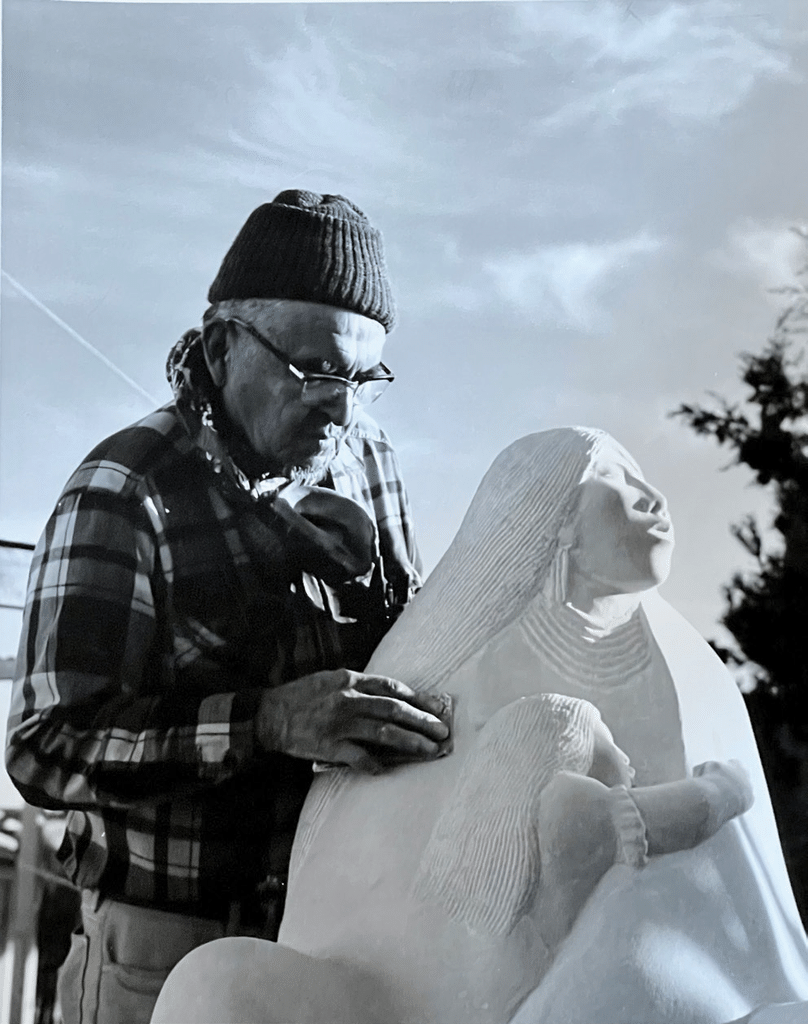
Chiricahua Apache | 1914-1994
Allan Houser (also known as Allan Haozous) was a sculptor, painter and educator who helped establish the history of Native American modern art.
Allan was born in Oklahoma and was part of a Chiricahua Apache family. He originally started off as a painter but began creating sculptures using various materials such as wood, stone and bronze whilst attending Santa Fe Indian School.
His art displayed a beautiful relationship between his identity and experimenting with art. He used his Apache background but also experimented with modern designs. This meant he began to simplify human figures.
Allan’s sculptures often give a sense of calm strength. He would simplify his pieces to show the key features but still kept a sense of humanity through his poses and gestures.
This was very significant for Native American art. He showed that you could still stay closely connected to your indigenous roots but also experiment with modern art.
He helped to create a movement in Native American art through teaching and mentoring. He became associated with the Institute of American Indian Arts.
In 1992, he was awarded the National Medal of Arts.
Why His Work Matters
Allan helped expand the possibilities of Native American sculpture. His career challenged the idea that indigenous artists should only use one specific style.
As a collector, his legacy reminds us to look past the visuals and think about the choices made by the artist.
2. Fritz Scholder – Challenging Native American Identity
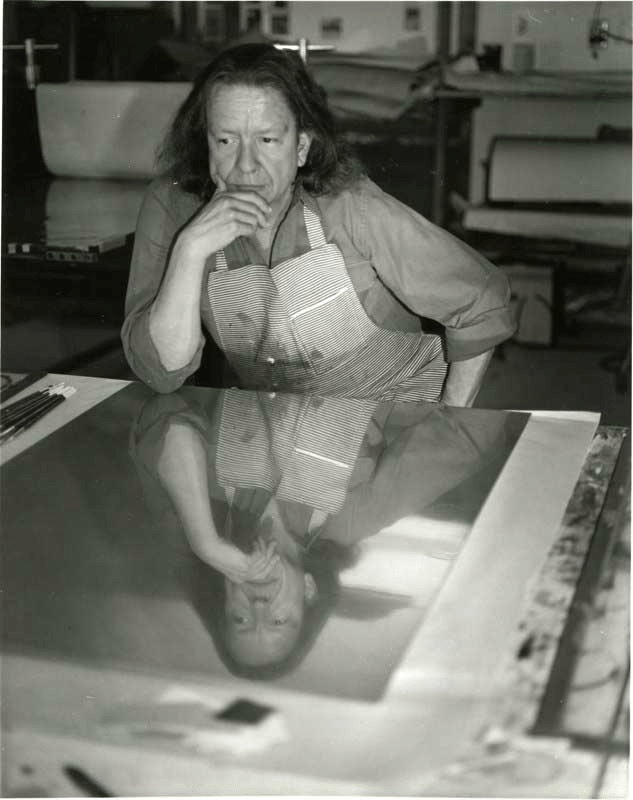
Luiseño | 1937-2005
Fritz Scholder became one of the most influential and controversial artists in modern Native American painting.
Fritz challenged the stereotypical view of indigenous people. He created modern paintings using bold brushstrokes, unexpected colour and psychological styles. His paintings displayed modern indigenous people.
His influential work featuring Native American figures began in the late 1960s after becoming associated with the Institute of American Indian Arts in Santa Fe. Fritz taught here between 1964-1969.
Fritz’s paintings often included modernist and pop art elements. His figures looked distorted, challenging and uncomfortable. This challenged the idea of what collectors thought was the perfect image of Native American identity.
His work challenged the idea of who can represent a community, how outsiders see their cultural identity and if indigenous artists should be expected to create certain work.
This caused a lot of controversy. His images caused discussion around representation and challenged collectors to think about how modern Native American art can challenge people.
Why His Work Matters
Fritz helped expand the topics, techniques and attitudes of Native American painters. He challenged the idea that indigenous art should be sentimental, historic or follow one style.
His legacy helps encourage people to be curious when looking at art.
3. T.C. Cannon – Unique Native American Paintings
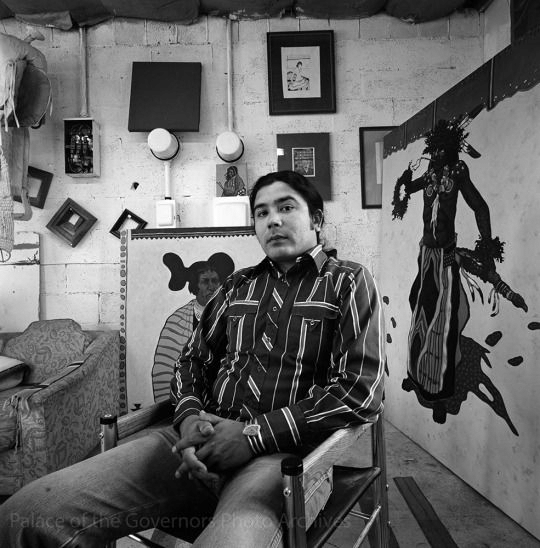
Kiowa and Caddo | 1946-1978
T.C. Cannon was a painter, printmaker, poet and musician who made an impact on Native American art through his short career.
Tommy Wayne Cannon grew up in Oklahoma and was registered as part of the Kiowa Tribe. He was also part Caddo. He studied at the Institute of American Indian Arts in Santa Fe where he was taught by Fritz Scholder.
T.C.’s paintings are recognised for being vibrant with bold compositions and indigenous imagery. They often include traditional clothing, everyday items, modernist styles and popular culture elements.
His work often includes traditional clothing, everyday items, modernist styles and popular culture elements. He challenged the idea that indigenous traditions should be kept separate from modern times.
His time in the military during the Vietnam War and the political times of the 1960s and 1970s influenced his work. His art often challenged themes around identity, memory, survival and how Native communities fit into American society.
His compositions are very engaging as they are confident with bold colours and unusual compositions. His subjects make the viewer want to look closer at the piece to see what is going on.
T.C. passed away in 1978 aged 31 however his experimental work helped push Native painting forward.
Why His Work Matters
T.C. showed that Native American art could be personal, political and experimental.
His work is still important in the history of modern indigenous painting. His work shows that artists can take inspiration from a variety of traditions to create a unique style.
4. Kay WalkingStick – Reimagining Landscape, Land And Identity

Cherokee Nation | b. 1935
Kay WalkingStick is a painter who looks at the relationship between landscape, memory, spirituality and indigenous identity.
Her work includes abstract and realistic styles. However, she uses both to challenge how places can mean different things to different people.
Her work became known for her diptychs. These are pieces of art made from two connected panels. Some pieces include common landscape scenes with abstract patterns. This encourages the viewer to think about how the landscape connects to the history.
Her passion for landscape is very significant. Whilst a mountain, canyon or countryside scene may seem like a piece focused on colour, light and composition, Kay’s work allows art lovers to think about the cultural history and relationships with the land that may not be included in more traditional pieces.
Kay doesn’t shy away from experimenting with her art. Her work focuses on colour, texture, structure and abstract styles. This helps to challenge identity and history without being too literal.
Throughout her career Kay has had major exhibitions in museums and her work is included in some of the most prestigious collections. Her work has helped include indigenous perspectives.
Why Her Work Matters
Kay has helped challenge how landscape can be seen in contemporary art. Her work encourages art lovers to think past the landscape and consider how it connects to memory, cultural identity and belonging.
5. Jaune Quick-to-See Smith – Challenging History Through Art
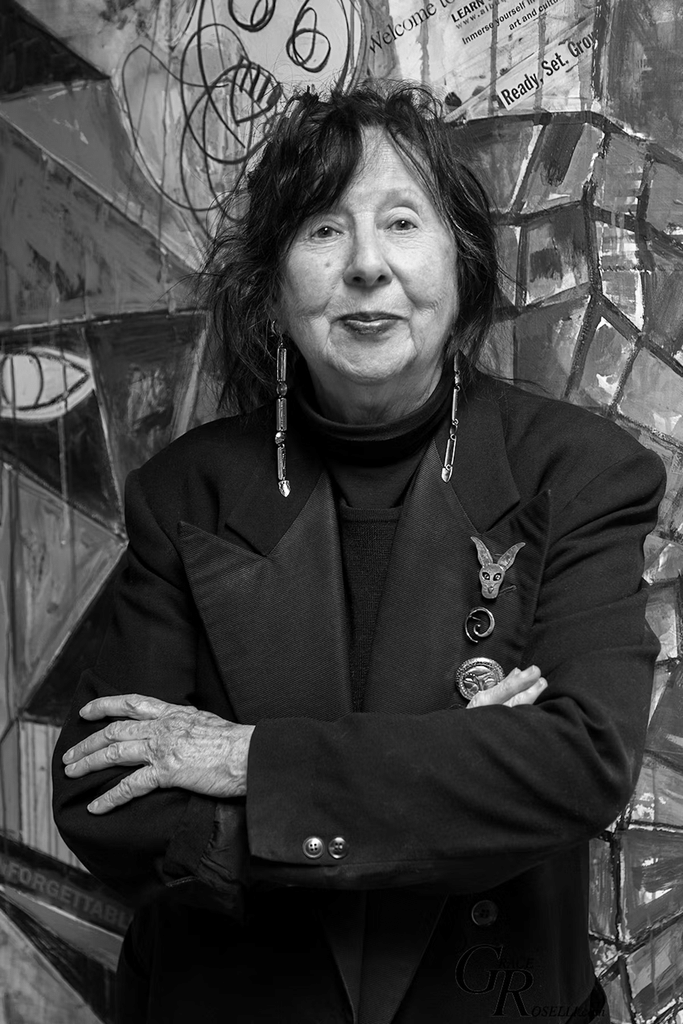
Confederated Salish and Kootenai Tribes | 1940-2025
Jaune Quick-to-See Smith was a painter, printmaker, curator, educator and activist. Her work challenged traditional views on American history and how indigenous people have been portrayed.
Her work included abstract, collage, mapping, text and traditional symbols. This allowed her to challenge themes around land, political power, environmental change and memory in a bold and layered way.
Mapping became an important part of her work. She used maps to challenge how land ownership, loss and indigenous communities have continued.
Her paintings often include fun elements but also powerful social messages. The viewer may be attracted to the composition, colours and familiar imagery but soon find themselves challenged by the piece.
Jaune had a huge influence on indigenous artists. She spent decades campaigning for Natives and creating opportunities for indigenous art.
In 2023 she curated The Land Carries Our Ancestors: Contemporary Art by Native Americans at the National Gallery of Art. This exhibition included nearly 50 Native artists who created paintings, sculptures, photography, beadwork, weaving and more.
This exhibition showed how diverse indigenous art is in the modern day and highlighted the importance of land, history and community.
Jaune passed away in January 2025. Her work and campaigning has helped shape how indigenous artists portray themselves and how institutions understand their contributions.
Why Her Work Matters
Jaune showed that art can be a personal and challenging piece. Using collage, mapping and humour she created a unique style to challenge complex historical and political themes.
Her legacy reminds us that supporting indigenous art goes beyond just the pieces. We need to recognise the artists, communities and history that contribute to the wider art world.
What do these artists have in common?
These artists don’t all fit into one movement and their work isn’t all the same style. However, they are all significant as they all have different styles.
Houser challenged identity through sculpture. Scholder challenged stereotypes. Cannon combined indigenous identity with bold modern imagery. Kay challenged landscape through cultural memory and abstract. Smith used collage, mapping and satire to challenge dominant historical themes.
They have all helped push Native artists forward with their work.
Their careers have also challenged the misconception that indigenous art is only from the past. Native artists nowadays are experimenting with generations, materials and ideas.
The Smithsonian have an exhibition called Stretching the Canvas: Ten Decades of Native Painting. This shows how these movements fit into a much larger history of indigenous innovation. As there are multiple generations included in the exhibition, it shows how diverse Native painting is. From modernist experimentation to contemporary abstract and mixed media.
Discover The Artists Changing The Art World

Learning about pioneering artists can change the way you look at art. They encourage you to think more about the choices made, history and perspective of the artist.
As a collector this can become a habit. You can start to look at new styles, follow artists whose work you like and take time to understand the stories behind each piece.
At ArtNativ we believe art should be a way to discover new artists. We have a marketplace where you can discover original artwork from artists worldwide. If you have a specific vision in mind, we also offer bespoke services allowing you to create your own piece with an artist.
These artists are an important part of Native American art history context. Their work remind us why it is important to look past well-known names and keep discovering the many voices shaping the art world.
Keep discovering art with ArtNativ. Find original artwork, discover artists using a variety of styles and mediums or create your own piece