
This July 18 marks Nelson Mandela International Day and the birthday of a man who picked genuine interest in art at 83 and intentionally authored one last chapter of his legacy.
Nelson Mandela spent 27 years in prison. He became South Africa’s first Black president. He won the Nobel Peace Prize and more than 250 other honours.
Then he retired. And for the first time in decades, the busiest man in the world had nothing to do.
So in July 2001, at 83 years old, he started to draw.
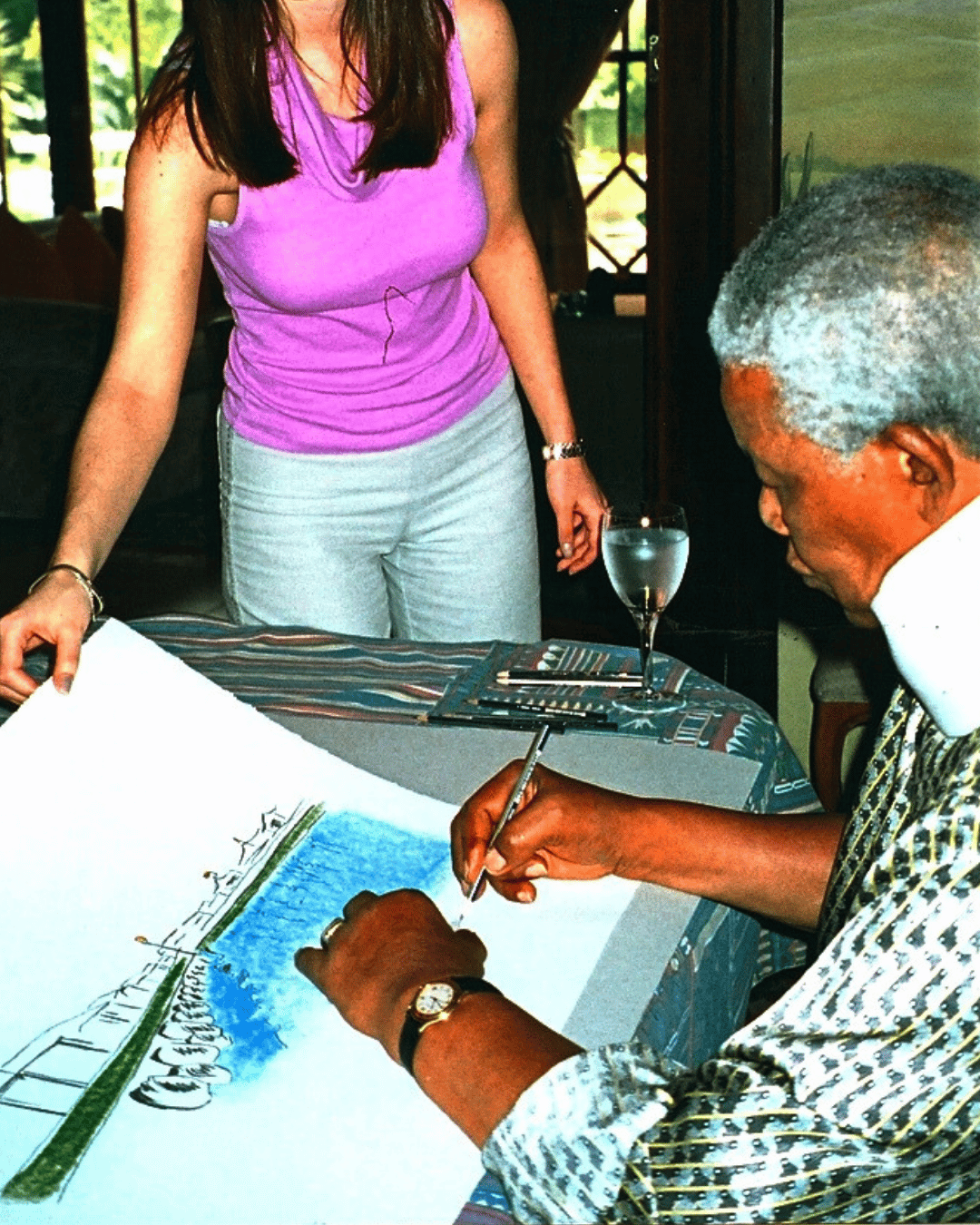
Why did Nelson Mandela start making art?
It didn’t begin as a grand plan. A creative director, showed him how to draw with charcoal, and that was how it started. His early confidence came from the drawings of John Lennon: If a musician could tell their story with sketches maybe a statesman could too.
His eldest daughter, Makaziwe, later explained that after the presidency, art became her father’s way of expressing himself, of sharing his story, not just for history sake but as a way to process all that had happened.
But something else was happening too. Makaziwe also said the world had reduced her father to a politician, as if Nelson Mandela had simply fallen from the sky: no roots, no village, no sense of belonging. The sketches corrected that. The sketches allowed people to understand his story.
Mandela once said how he wished to be remembered: “simply as a man who had done his duty on earth”. Nothing more. His sketches ensured that the public didn’t narrate his story the way they wanted it to be.
He would go on to complete around 40 finished works, studying under the artist Varenka Paschke. Three collections emerged from him: the Struggle Series, images of hands; the Robben Island sketches, drawn from the prison that held him for 18 years; and the Homeland Series, tender scenes of Qunu, the village where he was born and where he chose to be buried.
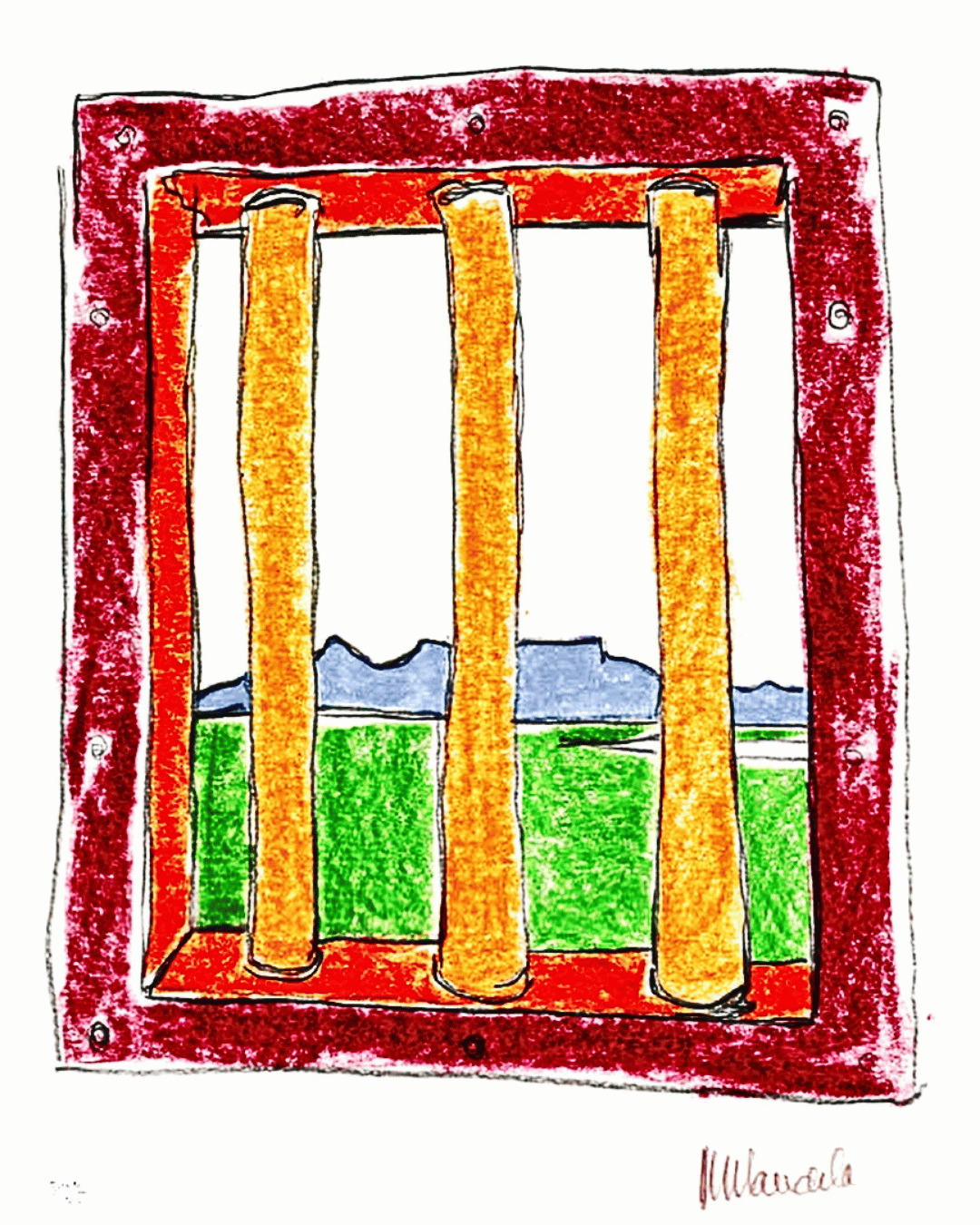
The vision behind Mandela’s Robben Island sketches
Here is the detail you need to know.
When Mandela first sketched Robben Island with charcoal, he looked at the drawings and found them bleak, sorrowful, maybe. In prison, he recalled, almost everything had been grey: the stone, the sand, the uniforms.
So he made a decision. The sketches would be as a celebration. He then painted them with bright, cheerful colour. Not to hide the pain but to overrule it.
He wrote that Robben Island had once been a place of darkness: but out of that darkness came a brightness so powerful that no prison walls, bars, or surrounding sea could hold back. He coloured the island the way he had chosen to see it: as a symbol of the human spirit, not as a monument to tyranny.
Notice what you see at The Cell Door. The bars of the door that locked him for 18 years are drawn not in grey, but in purple which is the colour of royalty. And in the lock, he drew a key: A key. In the lock of his own cell.
He never sold that one. Of all his works, The Cell Door was the only piece Mandela kept in his personal collection until the day he died. His daughter said it held particular meaning for him: a constant reminder that he could not forget what seemed unforgettable and that freedom must never be taken for granted.
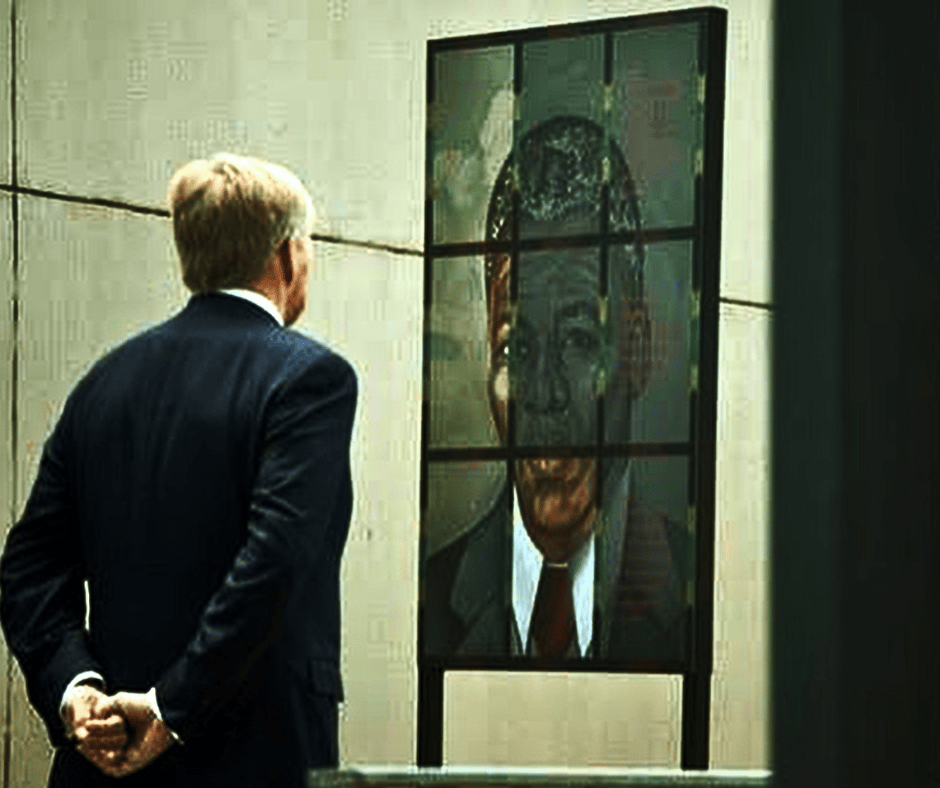
How much is Nelson Mandela’s artwork worth today?
For years, Mandela’s art was mostly lithograph editions, sold to raise money for his charities. Then in May 2019, The Cell Door became the first original Mandela work ever to reach the open market. Bonhams estimated it at $60,000–$90,000.
The Cell Door was sold for $112,575 and this set his auction record at a sale that broke six world records for African art in New York.
His signed print editions continue to trade steadily at auction, with the strongest reaching tens of thousands of dollars. But notice where the real value is: it’s not in the editions, but in one original, the personal one, the one with the story, the one he refused to let go.
That’s not an accident. It’s how art value has always worked, fame set up the sales but story, meaning, and provenance sustains it.
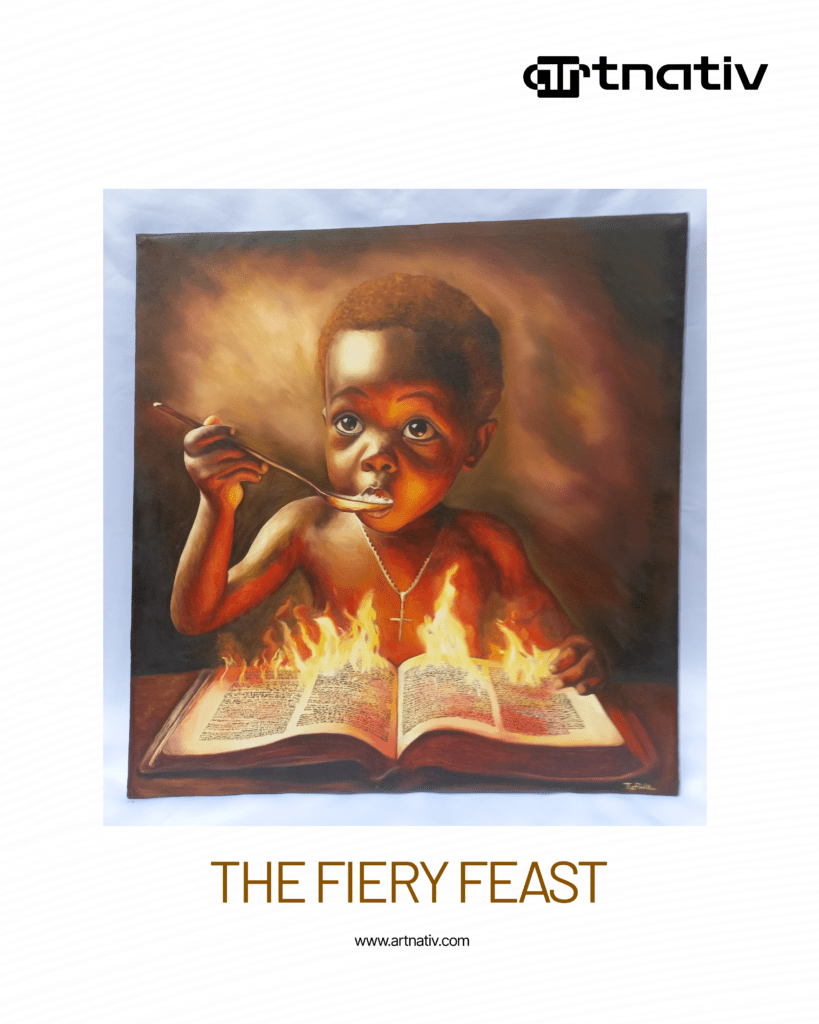
Why provenance mattered — even for Mandela
There’s a footnote to Mandela’s art career that most tribute posts skip and it’s the part we think about most.
In the mid-2000s, disputes erupted over some works sold in his name. Mandela himself questioned the signatures and had to go to court to verify where the proceeds that were meant for charity went. Even for one of the most renowned men on earth, the question was “is this real, and where did it come from?” turned out to be very complicated to answer.
If Mandela’s work needed verified provenance, everyone’s does.
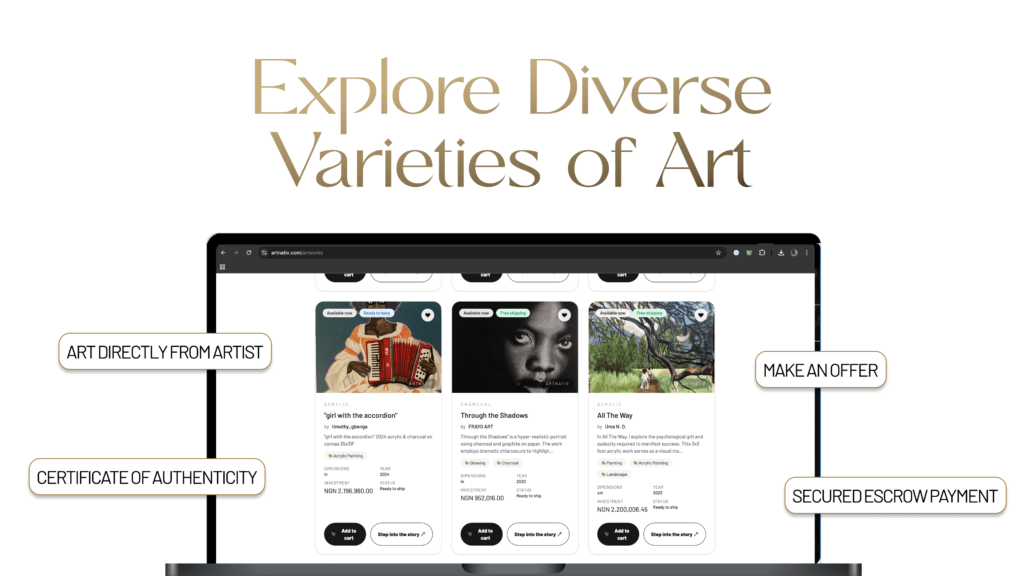
It’s the same reason every artwork on ArtNativ comes with a Certificate of Authenticity and a Provenance Record. Not as paperwork but as protection. For the artist’s legacy, and for the collector who believes in it.
What Mandela’s art teaches collectors of African art
Mandela was never trying to be a great draughtsman. He was a beginner who became an artist late in life, drawing with crayons and the will to tell his own story. What made the work matter; what made a purple cell door worth six figures was that it carried a story inside it.
That’s the same thing we see every week in the studios of artists working today. Their lives, histories, culture and visions shared on canvas, waiting for the collectors who notices it first.
Mandela told his story before anyone else could tell it for him.
Somewhere on the continent right now, another artist is doing the same.
Quick answers about Nelson Mandela’s art:
Did Nelson Mandela paint? Yes. Mandela began drawing in July 2001, after retiring from the presidency, and completed around 40 works in charcoal and pastel, many reproduced as signed lithographs.
What did Nelson Mandela’s art depict? Three main collections: hands symbolising the journey from injustice to freedom (the Struggle Series), memories from Robben Island, and his childhood village of Qunu (the Homeland Series).
How much does Nelson Mandela’s artwork sell for? His auction record is $112,575, set in 2019 when the original sketch The Cell Door, Robben Island sold at Bonhams New York. Signed lithograph editions typically sell for far less, from the low thousands up to the tens of thousands of dollars.
Why did Mandela use bright colours in his prison sketches? He said his first black chalk sketches looked bleak, so he chose bright colours deliberately to present Robben Island as a celebration of the human spirit rather than a monument to oppression.
What materials and techniques did Nelson Mandela use in his drawings? Mandela worked mainly in charcoal, pastels, and wax pastel crayons. The Cell Door was drawn in wax pastel crayon. He sketched from photographs, guided by his tutor Varenka Paschke. For the lithograph editions he used a layered method: strong black crayon lines went down first as a guide, then he chose the colours for each image, with the separate layers overlaid to build the finished picture. It’s a simple, direct technique, proof you don’t need decades of training for a work to carry meaning.
Where can I view digital copies of Nelson Mandela’s original drawings? His works are catalogued on art-market platforms such as Artsy and Artnet, and the Homeland and Unity series were published digitally by WeTransfer’s WePresent, produced with the House of Mandela. The House of Mandela Art oversees his official collection.
How can I find Nelson Mandela portraits? Are you Trying to get the perfect Nelson Mandela portrait? Instead of hunting for pre-made pieces, let ArtNativ connect you with verified artists open to custom commission requests.