
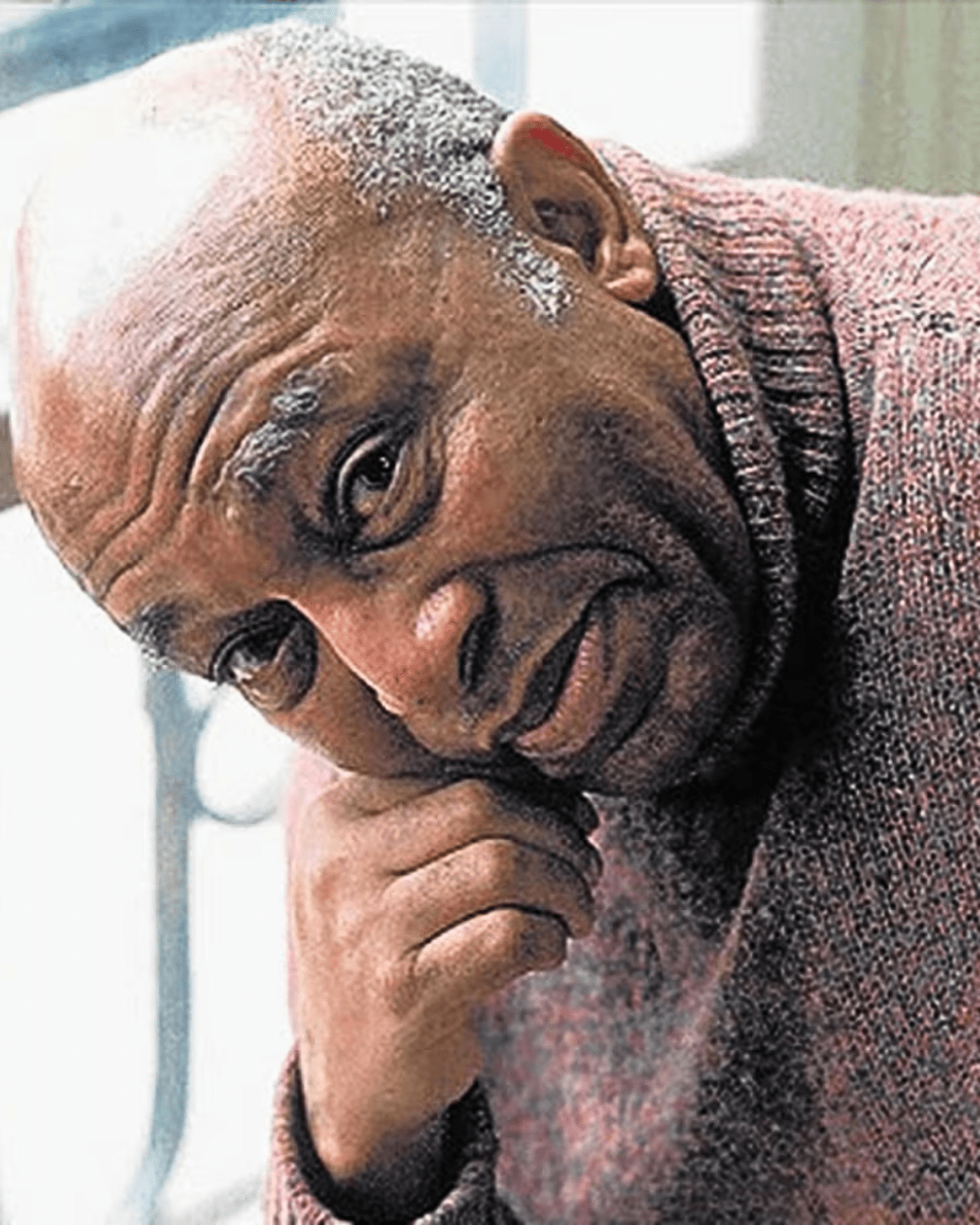
Gerard Sekoto was born in 1913 at a Lutheran mission station in Botshabelo, a quiet settlement near Middelburg in what is now Mpumalanga. His father was a priest, a man of discipline, faith, and career. His mother was a full housewife and somewhere between Sunday sermons and classroom lessons, Sekoto started drawing on every surface he could find.
Nobody handed him a canvas nor did anybody pointed to him and said “artist.” He just kept drawing with whatever was available. That instinct, stubborn and private, was the seed of one of the most important careers in African art history.
Sekoto Early Paintings
When Sekoto arrived at Grace Dieu, the Diocesan Teachers Training College in Pietersburg, he found a school with a clear idea of what Black artists should do. Sculpture was the thing, woodcarving, commissions, work that fit neatly into what the institution had decided was the appropriate creative expression for its students. The sculptor Ernest Mancoba was there too, and the two became close friends, both dreaming of something bigger than what the curriculum suggested.
For Sekoto, however, while everyone around him carved, he painted. He hid his canvases when people came near, only revealing them to the handful of people he truly trusted: Mancoba, Louis Makenna, Nimrod Ndebele. Not out of shame, but out of a quiet, stubborn certainty that what he was doing was different, and he wasn’t ready to hand it over to people who wouldn’t understand it. That private defiance was the first act of an artist who would spend his entire life refusing to make work that wasn’t his own.
The Paintings You Need to Know
In 1938, at 25, Sekoto left for Johannesburg. He moved in with relatives on Gerty Street in Sophiatown and started painting everything he could lay his eyes on: streets, people, workers, children, the full lifestyle of Black urban life in apartheid South Africa.
Yellow Houses. The Soccer Game. Cyclists in Sophiatown. Migrant Workers. These weren’t heroic paintings or political statements in the conventional sense. They were something relatable and a straightforward insistence that ordinary Black life was worth looking at. In 1940, the Johannesburg Art Gallery agreed, purchasing one of his works and making it the first painting by a Black artist to enter a South African museum collection. A landmark moment that changed very little about how the country treated him.
Sekoto Golden Years: Eastwood, Pretoria
Between 1945 and 1947, Sekoto lived in Eastwood, Pretoria, with his mother and stepfather. In this season there was no gallery pressure, no collector rush; Just a man watching the world around him and painting what he saw.
Prison Yard. The Wine Drinker. Children Playing. Women and Child. Art historians consistently return to this period as the peak of his South African work and it’s easy to understand why. There’s a stillness in these paintings that you don’t find in his Sophiatown years. Sekoto was fully inside his own vision, and it shows in every canvas. These were the last paintings he would make on South African soil and they carry the particular weight of a farewell that nobody knew was coming.
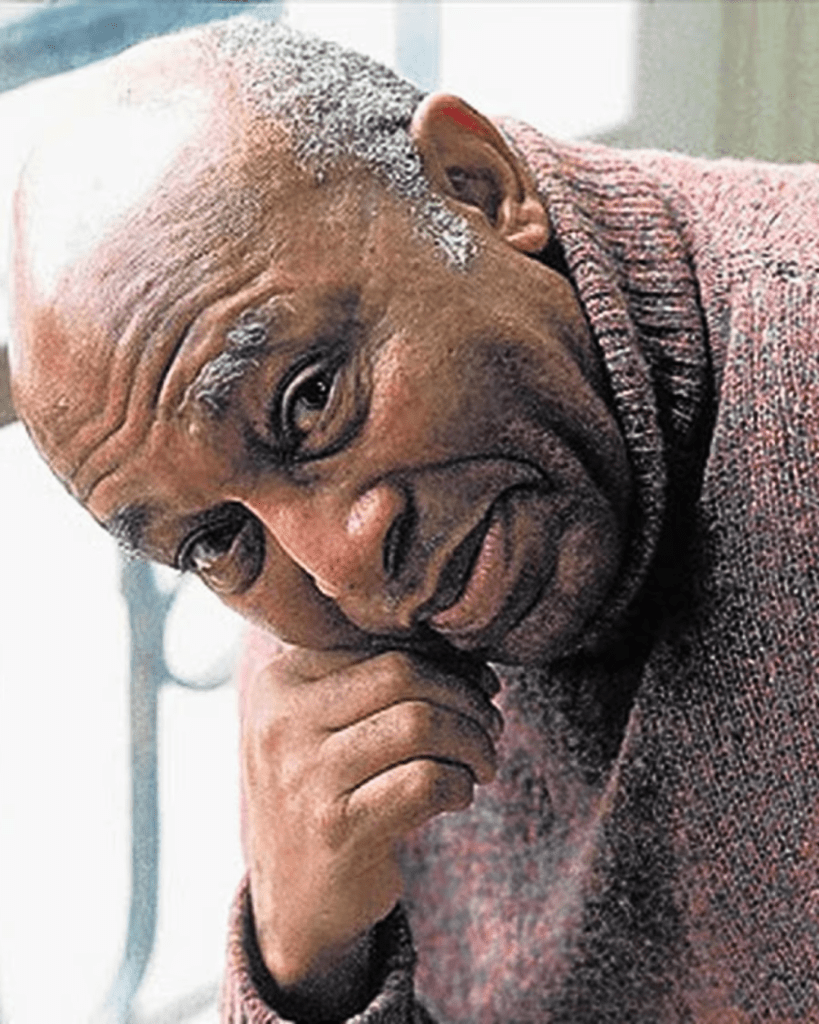
The Exile — Why Sekoto Left and What It Cost Him
In 1947, Sekoto left for Paris under what history records as “self-imposed exile“. The people who knew his work felt his absence immediately. But the man himself arrived in a city that didn’t know him at all, with very little money and no guarantee of anything.
The first years were survival. He found work as a pianist at l’Echelle de Jacob, a nightclub that had reopened after World War II, playing jazz and singing Negro spirituals to crowds who came to enjoy the moment only. Music became the thing that kept his lights on while painting kept him whole. Slowly, Paris became somewhere work could continue. And continue it did, for the rest of his life.
29 Songs and the Sound of Longing
Between 1956 and 1960, several of Sekoto’s musical compositions were published by Les Editions Musicales. He composed 29 songs during his years in exile, pieces that those who studied his work described as “excessively poignant,” which is a phrase that earns its weight. Not just sad or nostalgic, excessively poignant, the kind of longing that doesn’t know how to be proportionate.
He visited Senegal in 1966, spending a year there and reconnecting with the African continent he’d been separated from. He kept painting, composing and never returned to South Africa. Not because the love wasn’t there it clearly was, in every song and every canvas but because love for a place and the ability to live in it are two entirely different things, and apartheid South Africa had made the choice for him.
What the Auction Market Don’t Tells Collectors
Today, Sekoto’s work hangs in the Johannesburg Art Gallery, the South African National Gallery in Cape Town, the Pretoria Art Gallery, and the Philadelphia Museum of Art, among others. His paintings are studied, collected, and cited as foundational to the story of South African modern art and urban Black art as a movement.
But the galleries don’t always tell you what it cost. They don’t tell you about the nightclub in Paris or the 29 songs heavy with displacement or the fact that the country whose streets he painted with such love never gave him a reason to come back. Gerard Sekoto died in Paris on 20 March 1993, at the age of 79. South Africa was one year away from its first democratic election but he didn’t make it.
He Proved Black Life Was Worth Painting
The real weight of what Sekoto did isn’t in any single canvas. It’s in the decision he made, over and over across six decades, to paint Black life as something worthy of attention. Not as struggle or sociology but as life – full, complicated, dignified, and worth preserving.
He was the first to introduce the human situation of urban Black South Africans into the country’s art from the inside not as an observer but as a participant. That act was radical in 1940, because the question Sekoto spent his life answering — whose life deserves to be seen? — is still being asked and the artists carrying that question forward deserve the same attention he fought, quietly and stubbornly, to claim for himself.

The Thread Is Still Running
Sekoto’s story is one thread in a much longer canvas. African art history is full of names that should be as known as his, artists working right now in Lagos, Accra, Nairobi, Johannesburg, and in diaspora cities across the world, making work the mainstream hasn’t caught up to yet.
At ArtNativ, we believe those names deserve the same careful attention Sekoto’s work has finally received. Not after the fact. Now — while the work is being made, while the artists are alive, while there’s still time to build the collections and the conversations that history will look back on. Sekoto showed us what it looks like when an artist refuses to disappear. The least we can do is pay attention.
→ Discover Exciting African Artworks On ArtNativ