
ArtNativ News
A sacred drum lands in Abidjan after 110 years in French custody.
A Nigerian-born artist creates the defining portrait of America’s first Black president.
France dismantles its own legal barrier to returning stolen African art.
A Burkinabé architect’s work stands permanently at one of the world’s biggest cultural festivals.
France Passes a Framework Law for Colonial Restitution
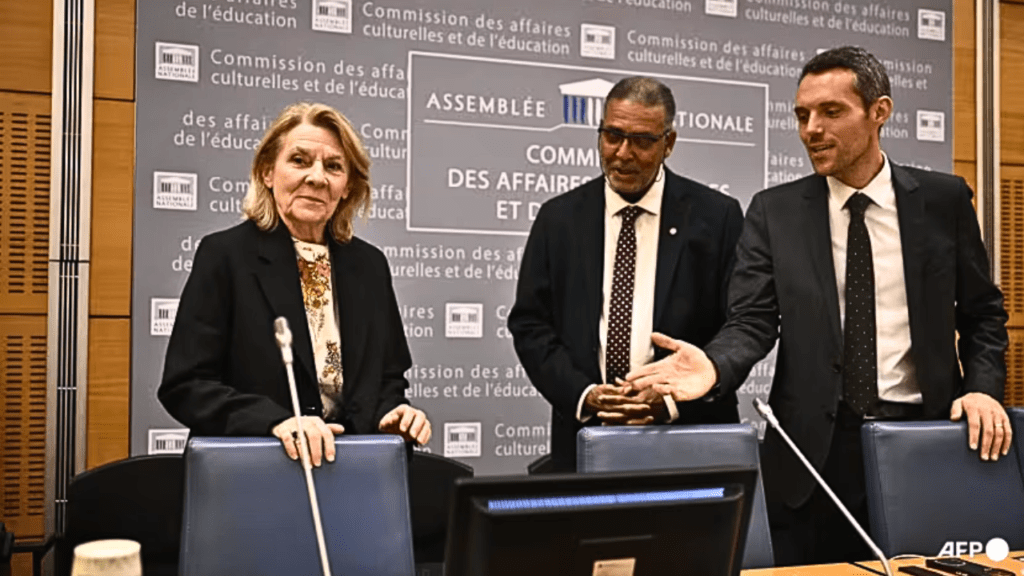
On April 13, the French parliament adopted legislation that changes how France handles cultural property taken during the colonial era. The law allows the government to return artefacts seized between the Congress of Vienna in 1815 and 1972, when UNESCO’s convention for the protection of cultural heritage came into force, by executive decree. No separate act of parliament was required.
Until now, every single restitution from a French public collection demanded its own specific legislation. The principle of inalienability, the legal doctrine that objects in French national collections cannot be removed, meant that returning a carved drum or a bronze figure required the same parliamentary process as passing a new law. The Djidji Ayôkwé, the sacred Ebrié drum returned to Côte d’Ivoire earlier this year, needed its own bill. So did every Benin Bronze. The new framework eliminates that bottleneck.
Under the law, a requesting state must commit to protecting the returned items and displaying them publicly. A bilateral scientific committee examines each case. The French senate imposed the creation of a national scientific commission, which will publish an annual report. The law excludes military items, public archives, and shares of archaeological excavations. The vote was unanimous, though some MPs criticised the 1815 start date for leaving Napoleonic-era and earlier seizures from the Americas outside the scope.
Algeria, Benin, Côte d’Ivoire, Madagascar, and Mali have already submitted requests. Ethiopia and Chad have filed general requests. Mali and Senegal are jointly pursuing the return of treasures from the Toucouleur kingdom, seized by French troops in 1890.
French public collections no longer operate under a blanket assumption of permanence when it comes to colonial-era acquisitions. The mechanism to return them now runs through administrative process, not legislative theatre.
The Djidji Ayôkwé Comes Home
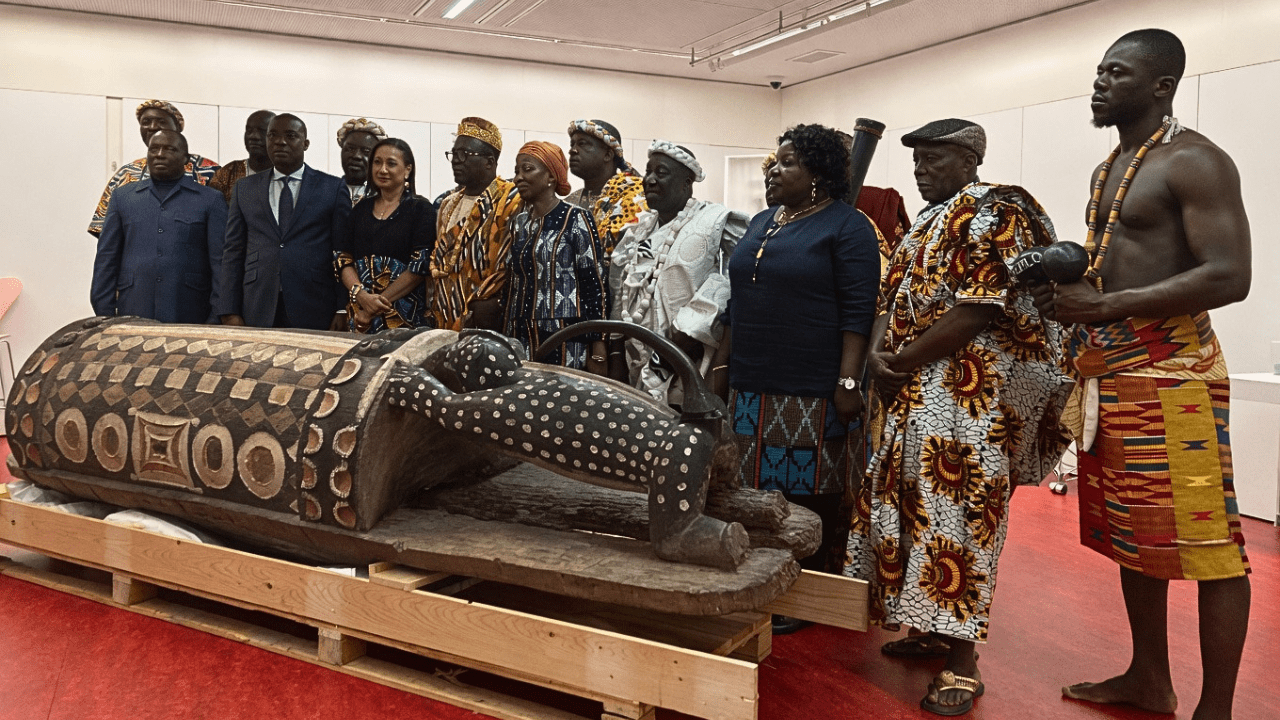
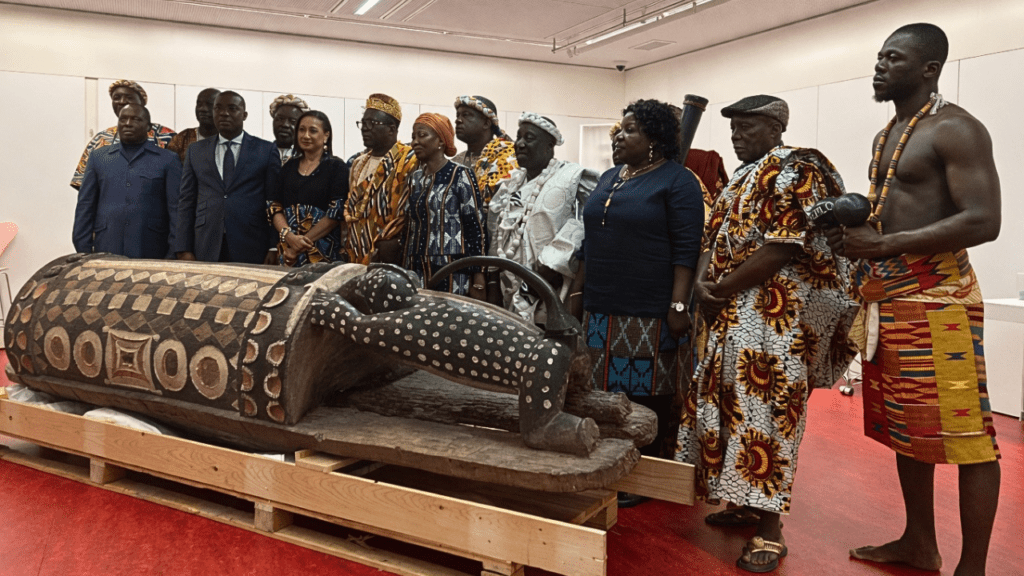
The object that set the legislative precedent arrived in Abidjan on March 13. The Djidji Ayôkwé, a 3.30-metre slit drum carved from iroko wood and weighing nearly 430 kilograms, belongs to the Ebrié people of what is now the Abidjan region. French colonial troops confiscated it in 1916. The seizure was deliberate: the drum’s beats carried messages up to 30 kilometres between villages, warning communities of forced recruitment drives and rallying collective resistance. Removing it silenced a vital organising tool.
The drum spent over a century in France. Between 1916 and 1930, the French governor Marc Simon kept it outdoors at his Ivory Coast residence, where it sustained weather and insect damage. It moved to the Musée de l’Homme, then to the Quai Branly–Jacques Chirac Museum in 2006. Before its return, conservators at Quai Branly consolidated the wood with resin to address structural weakening from wood-eating insects.
French Culture Minister Rachida Dati and her Ivorian counterpart Françoise Remarck signed the formal transfer of ownership in Paris on February 20. UNESCO Director-General Khaled El-Enany attended. UNESCO allocated $100,000 through its Abidjan office to support the drum’s promotion and enhancement.
On March 13, the drum arrived at Félix Houphouët-Boigny International Airport. An Atchan chief conducted an installation ritual. Youths from the village of Anoumabo performed a war dance. The artefact is now stored in a climate-controlled box, reacclimatising to the Ivorian climate to prevent cracking in the centuries-old wood. It will go on display this month at the newly renovated Museum of Civilizations in Abidjan, the drum as its centrepiece.
Njideka Akunyili Crosby Paints the Obamas
On April 9, the Obama Foundation announced the final eight artist commissions for the Obama Presidential Center, a 19.3-acre campus in Jackson Park on Chicago’s South Side. The Centre opens June 19th.
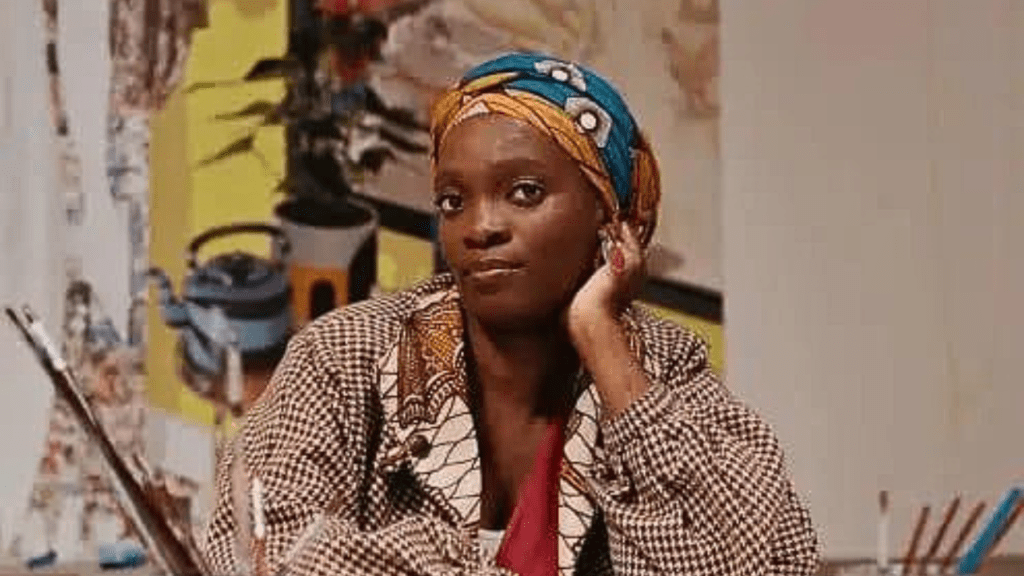
The centrepiece commission belongs to Njideka Akunyili Crosby. Born in Enugu, Nigeria, Akunyili Crosby is a 2017 MacArthur Fellow and participant in the 58th Venice Biennale. She created the first official portrait of President and Mrs. Obama for the Centre. The work weaves archival imagery, family albums, historical ephemera, and cultural touchstones into a layered composition connecting the Obamas’ legacy to the artists, activists, and leaders whose journeys preceded theirs. It occupies the Main Lobby of the Museum.
Akunyili Crosby is the daughter of the late Dora Akunyili, former NAFDAC Director-General. A Nigerian-born artist did not only receive a satellite commission or a group-show inclusion. She painted the portrait, for the lobby, of America’s first Black presidential centre.
The remaining seven commissions span the campus. Jeffrey Gibson, a member of the Mississippi Band of Choctaw Indians and of Cherokee descent, installed Yet With a Steady Beat: 17 circular prints evoking Native American hand drums and political buttons, each measuring 18 inches in diameter, mounted on wallpaper digitally printed with coloured bands. Chicago-born Rashid Johnson contributed Broken Men, a large-scale mosaic in the Teaching Kitchen rendering abstract figures through ambiguous, wide-eyed expressions. Lorna Simpson’s Durative, part of her ongoing “Ice” series, layers silkscreened glaciers and smoke with dripping indigo acrylic on fibreglass in the Seminar Room of the Presidential Suite.
Martin Puryear, who received a National Medal of Arts from President Obama in 2012, created Bending the Arc for the John Lewis Plaza. He hand-carved a 34-foot wooden beam, 3D-scanned it, enlarged and curved it digitally, then cast it in stainless steel. María Magdalena Campos-Pons installed a mixed-media recreation of the White House Rose Garden near the replica Oval Office. Hugo McCloud contributed a painting tracing significant locations in Obama’s life through geospatial mapping. Chicago-based designer Norman Teague carved eight walnut benches in tones ranging from deep chocolate to warm amber.
These eight join 22 previously announced commissions, including works by Carrie Mae Weems, Julie Mehretu, Mark Bradford, Theaster Gates, Maya Lin, Jenny Holzer, and Nick Cave, bringing the total to 30 new works across the campus. Curator Virginia Shore of Shore Art Advisory LLC oversaw the programme. The announcement coincided with a section at Expo Chicago called “Embodiment,” informed by the Centre’s architecture.
Thirty commissioned works. Permanent public infrastructure. Artists of African descent as the primary narrators. The Centre opens on June 19th.
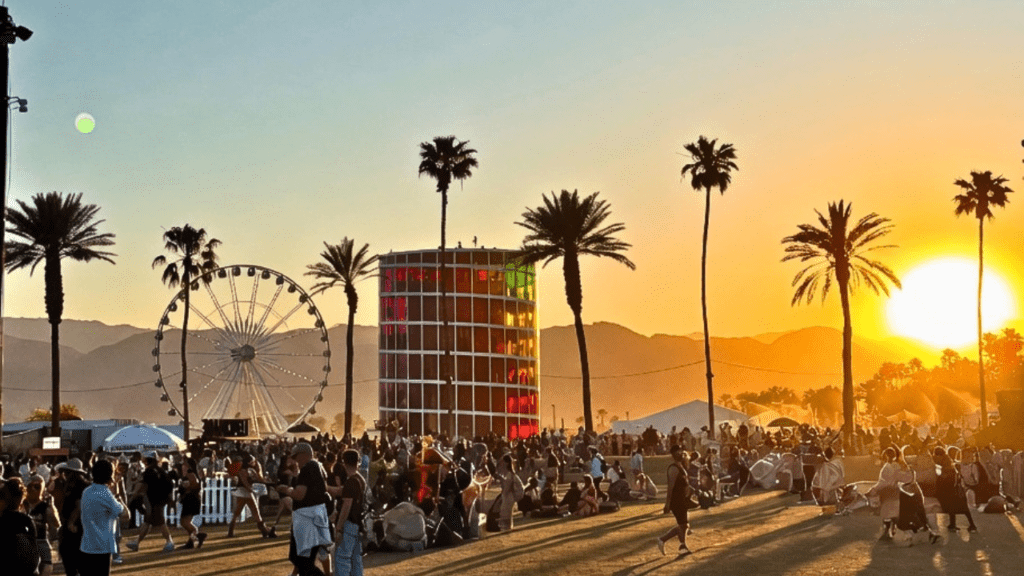
Coachella’s African Footprint is Now Permanent
The 25th edition of Coachella returned to Indio, California, from April 10 to 12 and April 17 to 19 with four new large-scale installations and a growing permanent collection that extends well beyond festival weekends.
The 2026 headliner installation, Maze, belongs to Rotterdam-based designer Sabine Marcelis. A labyrinth of inflated, curving PVC arcs in a gradient from cream to tangerine to deep red, Maze sits against the desert landscape like a mirage. The arcs are translucent, filtering sound and providing shade by day, glowing orange and gold against the black desert sky at night. London-based architect Kyriakos Chatziparaskevas contributed Starry Eyes: towering geometric forms inspired by the barrel cactus, some nearly 40 feet tall, their star-shaped crown openings framing the sky. The forms reference John Lautner’s Bob Hope House in Palm Springs. The Los Angeles Design Group’s Visage Brut reimagines the totemic tower through contemporary construction: a column of modular steel boxes, each folded or warped to the edge of structural integrity, animated by subtly anthropomorphic characters. Returning collective Dedo Vabo presented Network Operations, a new chapter in their ongoing Hippo Empire series blending sculpture and performance.
Raffi Lehrer of Public Art Company and Paul Clemente of Goldenvoice organised the programme.
Beyond the festival grounds, Coachella has built a permanent public art collection across the valley. Six works stand year-round in parks, intersections, and public spaces across Indio, Coachella, and La Quinta. Among them: Sarbalé Ke by Francis Kéré, the Burkinabé architect and 2022 Pritzker Prize winner, installed at Dr. Carreon Park in Indio since 2021. The other permanent works include Edoardo Tresoldi’s wire-mesh Etherea (2018), Andrew Kovacs’s Colossal Cacti(2022), Kumkum Fernando’s The Messengers (2023), HANNAH’s Monarchs: A House in Six Parts (2024), and Oana Stănescu’s Mutts (2022).
Kéré’s work sits permanently at one of the world’s highest-profile cultural festivals. African creative practice, embedded in global pop-culture infrastructure. Not as a guest. As a fixture.
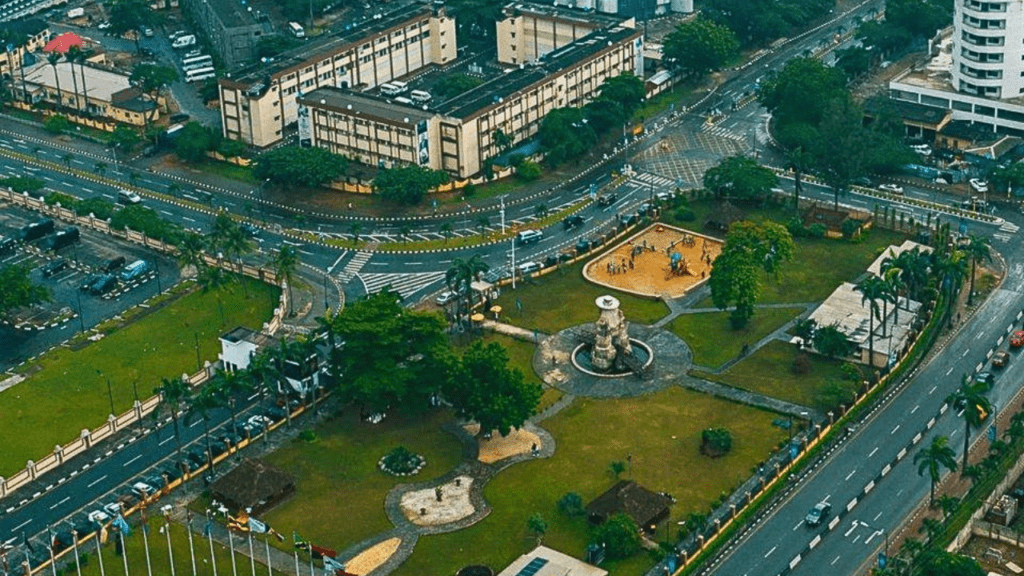
Lagos Named Among the World’s Top Art Destinations for 2026
Maxwell Rabb published a list of seven art destinations to visit in 2026 on Artsy. Lagos appeared alongside Venice, Doha, Sydney, Bangkok, Philadelphia, and Malta.
The recognition draws on a dense calendar. The fifth Lagos Biennial opens October 17, themed “The Museum of Things Unseen,” curated by Chinyere Obieze, Furen Dai, and Sam Hopkins. The Biennial will inaugurate the Àkéte Collection, a museum of modern and contemporary art featuring works from the last four editions plus donations and loans from international museums, private collections, and foundations. The collection aims to function as a living archive for the continent, the first public international collection of contemporary art on African soil.
ART X Lagos returns for its 11th edition from November 5 to 8. Artsy highlighted galleries Rele, kó, Ogirikan Art Gallery, Nike Art Gallery, and the John Randle Centre for Yoruba Culture & History as institutional anchors.
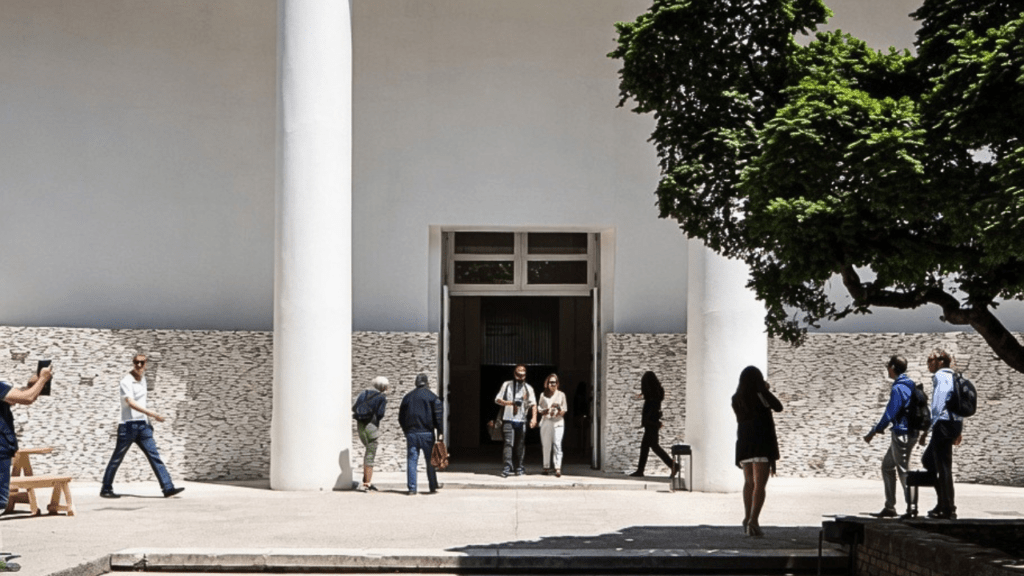
The 2026 Calendar Builds Toward a Packed Second Half
The Venice Biennale opens May 9 under the title “In Minor Keys,” the vision of the late Cameroonian-Swiss curator Koyo Kouoh, the first African woman chosen to curate the Biennale. Kouoh died from cancer on May 10, 2025. Five advisers she selected, curators Gabe Beckhurst Feijoo, Marie Helene Pereira, and Rasha Salti, critic Siddhartha Mitter, and researcher Rory Tsapayi, will realise her programme. Twelve African national pavilions are participating, including Cameroon’s “NZENDA: The Path Home.”
FNB Art Joburg anchors September in Johannesburg for its 19th edition. October through December stacks Lagos Biennial, ART X Lagos, Dak’Art in Dakar (16th edition, themed “(Anti)fragility”), AKAA Paris, 1-54 London at Somerset House, and Frieze London, all within a ten-week window. Collectors and curators building African art into their annual circuits no longer treat the continent as a detour.

Four Takeaways
Restitution now has a process, not just a precedent. France’s framework law converts one-off symbolic gestures into repeatable administrative procedure. The Djidji Ayôkwé proved the principle. The law scales it.
African artists are shaping how American civic history gets told. Njideka Akunyili Crosby’s portrait of the Obamas is the defining commission at the defining institution. The Obama Presidential Center’s 30-work programme positions artists of African descent as the primary narrators.
Permanent collections outlast festival moments. Coachella’s installations come and go. Francis Kéré’s Sarbalé Ke stays. The Àkéte Collection in Lagos stays. The Museum of Civilizations in Abidjan stays. The infrastructure that keeps art on the continent, and embeds African creative practice in global institutions, outlasts any single show or season.
The second half of 2026 runs through Africa. Venice, Joburg, Lagos, Dakar, Paris, London. Every major node in the global art calendar between May and December carries African presence. The continent is no longer adjacent to the circuit. It is the circuit.
Browse original work: artnativ.com
Never miss a gifting moment: artnativ.com/celebrate